
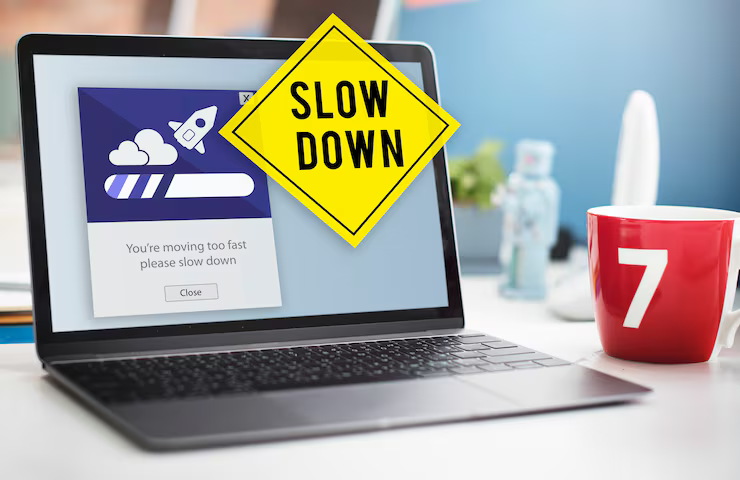
Users expect websites to load instantly in the fast-paced digital world of today. Potential clients are likely to abandon your website before even viewing your content if it takes longer than a few seconds to load. In addition to annoying visitors, a slow website has a direct impact on your revenue, reputation, and expansion.
Initial Impressions Count
A customer's initial contact with your brand is frequently through your website. A website that loads slowly gives the wrong impression and conveys a lack of professionalism or poor quality.
Users form an opinion about a website in a matter of seconds, according to studies. They quickly switch to a competitor if the website doesn't load quickly.
Increased Bounce Rates Indicate Lost Clientele
Your bounce rate rises when users depart your website without engaging. Your rankings may suffer as a result of search engines interpreting this as a bad user experience.
A sluggish website causes:
- Early page abandonment by visitors
- Reduced sign-ups and inquiries
- Decreased involvement
Conversion rates can drop dramatically with every second of delay.
People Who Use Mobile Devices Are Less Patient
The majority of users browse on mobile devices, where speed is even more important. Poor mobile performance leads to:
- Poor usability
- Increased rates of departure
- Lost chances to make sales
You are losing a significant percentage of your audience if your website is not mobile-friendly.
SEO Rankings Are Affected by Slow Speed
Search engines have verified that website speed affects rankings. Slow websites have a harder time ranking, which results in lower exposure and fewer natural visitors.
A website that has been technically optimized loads more quickly, ranks higher, and draws in more targeted visitors.
Decreased Credibility and Trust in the Brand
Consumers connect dependability and speed. A sluggish website may cause users to wonder:
- Your company's professionalism
- Transaction security
- The general caliber of your offerings
Customer retention is directly impacted by this loss of trust.
What Makes a Website Slow?
Typical causes consist of:
- Unoptimized or heavy images
- Inadequate web hosting services
- Overuse of scripts or plugins
- Outdated or dirty code
- Absence of compression and caching
A technical performance audit is necessary to find these problems.
Concluding remarks
Customers are silently turned off by a slow website. Speed is now a need for user satisfaction, SEO success, and business expansion rather than a luxury.
Investing in website optimization guarantees increased conversions, improved performance, and increased customer trust.

